I wrote about psychological safety and getting people to speak up, which is necessary. It's also not enough.
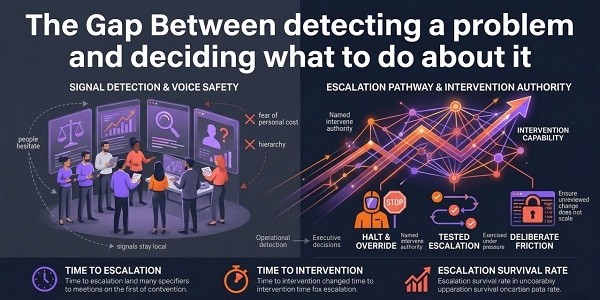
Because even when people find the courage to raise concerns, those concerns die in the gap between voice and authority.
And here's what that costs you:
Problems compound at machine speed. The system producing subtly wrong outputs today is training on those outputs tomorrow. The compliance drift you didn't catch becomes the pattern the algorithm learns to replicate.
Your best people leave first. High performers who raise concerns and watch them disappear into process don't raise them twice. They leave for organisations where escalation leads somewhere. Strategic blind spots become structural. When signals can't travel upward reliably, leadership operates on curated information. You're making high-stakes decisions with a distorted picture of operational reality.
Risk becomes liability in the gaps. Regulatory investigations don't ask "did anyone know?" They ask "when did you know, and what structure existed to ensure that knowledge reached decision-making authority?"
This is about whether your organisation can detect, escalate, and intervene on problems before they become systemic.
This piece breaks down:
- The credible intervention gap: why rational people choose silence when they don't believe the system will act
- Three metrics that reveal whether your escalation architecture is real or symbolic
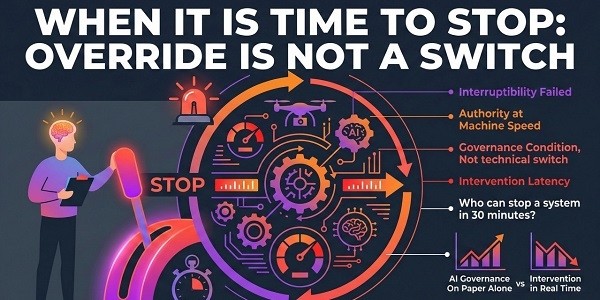
- The four conditions that must exist simultaneously - most organisations build the second, document the third and fourth, but rarely make either functional
Psychological safety gets people to speak. Escalation architecture ensures someone with authority actually hears them and can act.
Dr Joanna Michalska